
🍲 Creamy Vegetable Korma
Billabong Retreat, Walking The Harder Path & 27-Ingredient Curry To Renew Your Soul

Last year, in August 2024, I went to the Billabong retreat in the Hawkesbury in Sydney’s northern bushland. The last time I was there with Nick for a day’s respite, meditating, doing yoga, and getting massages. This time, I went by myself for two nights and stayed in a treetop cabin with a bathtub on the balcony overlooking this gorgeous view of the billabong. A billabong in Australian English refers to a small, often permanent body of water. It’s typically an oxbow lake formed when a river or creek changes course, though the term can also describe ponds or waterholes. The word is believed to have come from Wiradjuri, an Aboriginal language from New South Wales.
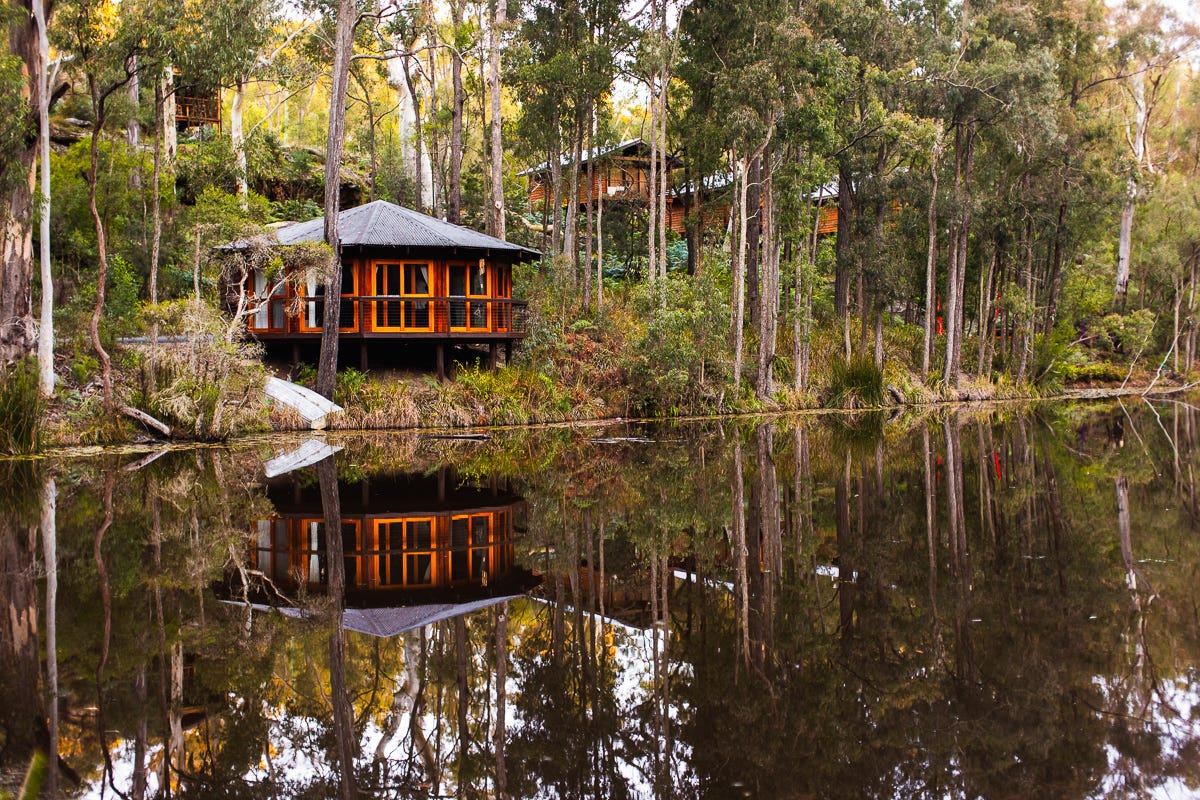
It was my first time away from home, family, my boys, and work in almost a decade and a half. I didn’t want to go; I was very resistant. I wanted to stay back and save my marriage, my family. But I went, and it was the hardest and ultimately the most transcendent, eye-opening thing I did.
It was the first step in my journey of learning to be alone, by myself, getting used to the silence and stillness that comes from not having a companion, someone who is always around, a partner, a fallback. I found it unbearable. I still struggle with it sometimes, but back then in August, it was hard to fathom how I would ever function solo.
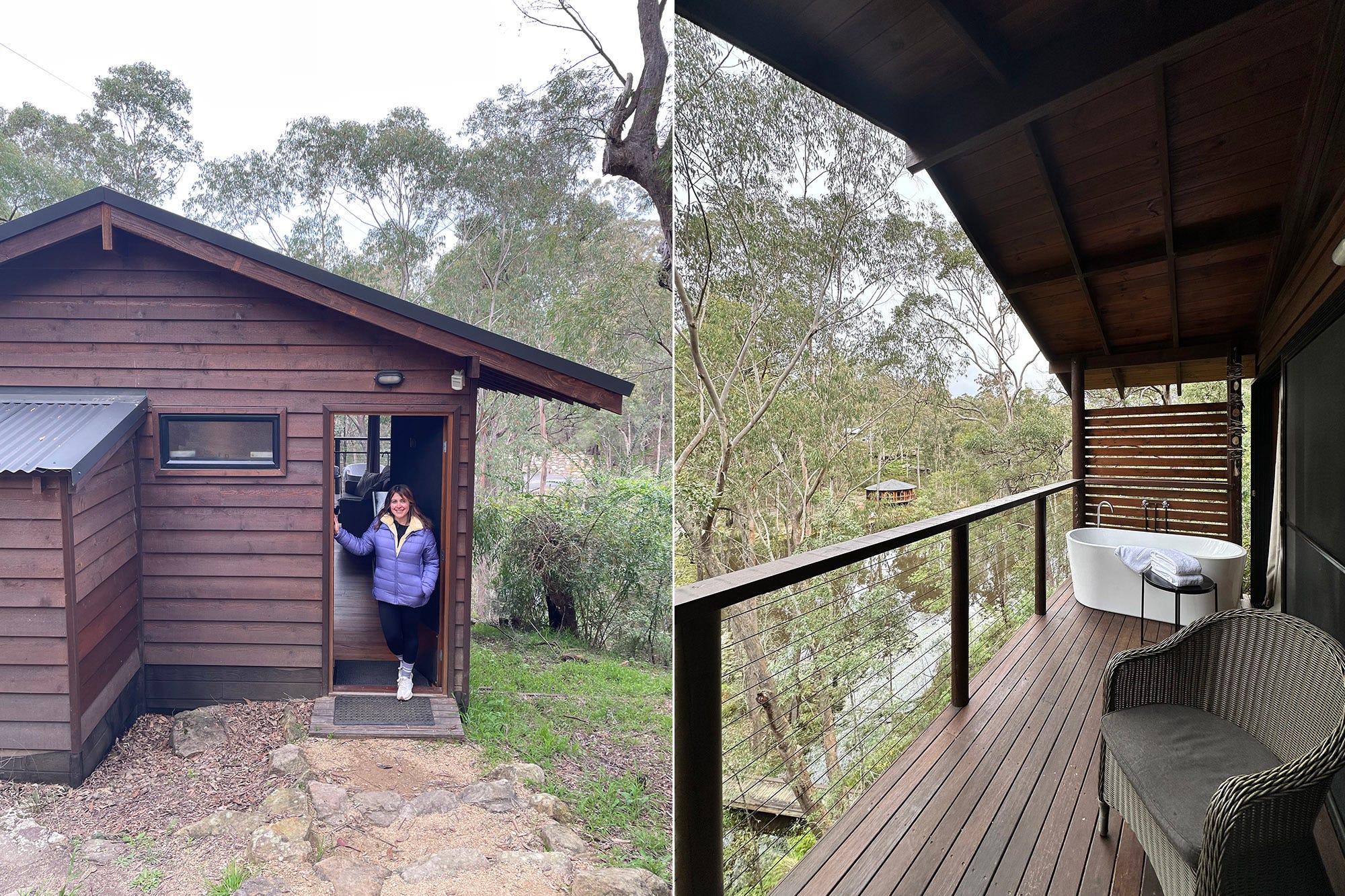
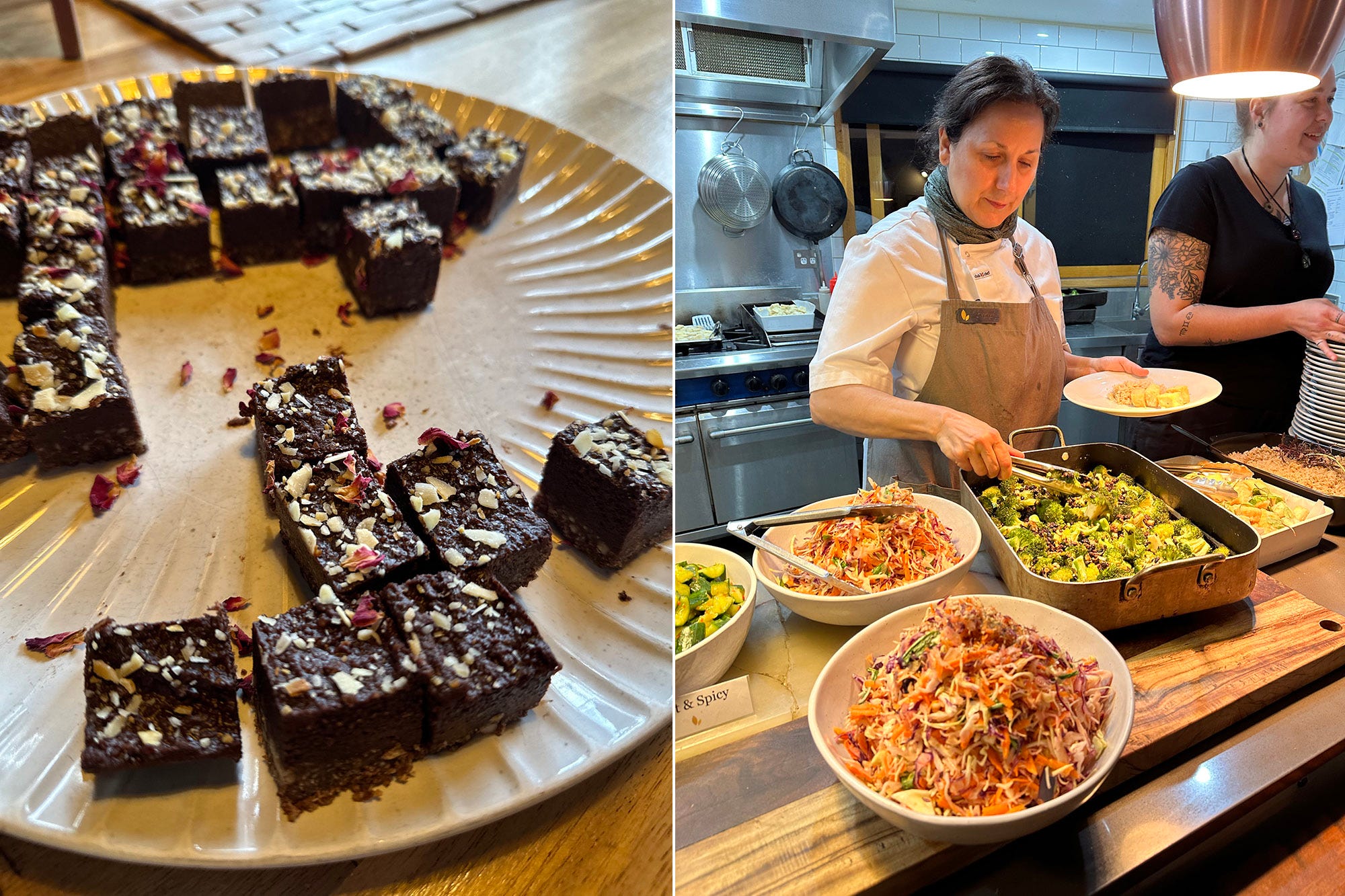
The retreat is a wonderfully unpolished haven of bushland. It invites you to be with yourself, sit with yourself, get uncomfortable in the silence, in the void of the day where you don’t have good mobile reception, so you resort to reading, meditating, napping, walking and looking forward to the beautiful plant-based meals offered in the communal kitchen and dining at set times - 12 noon and 6pm.
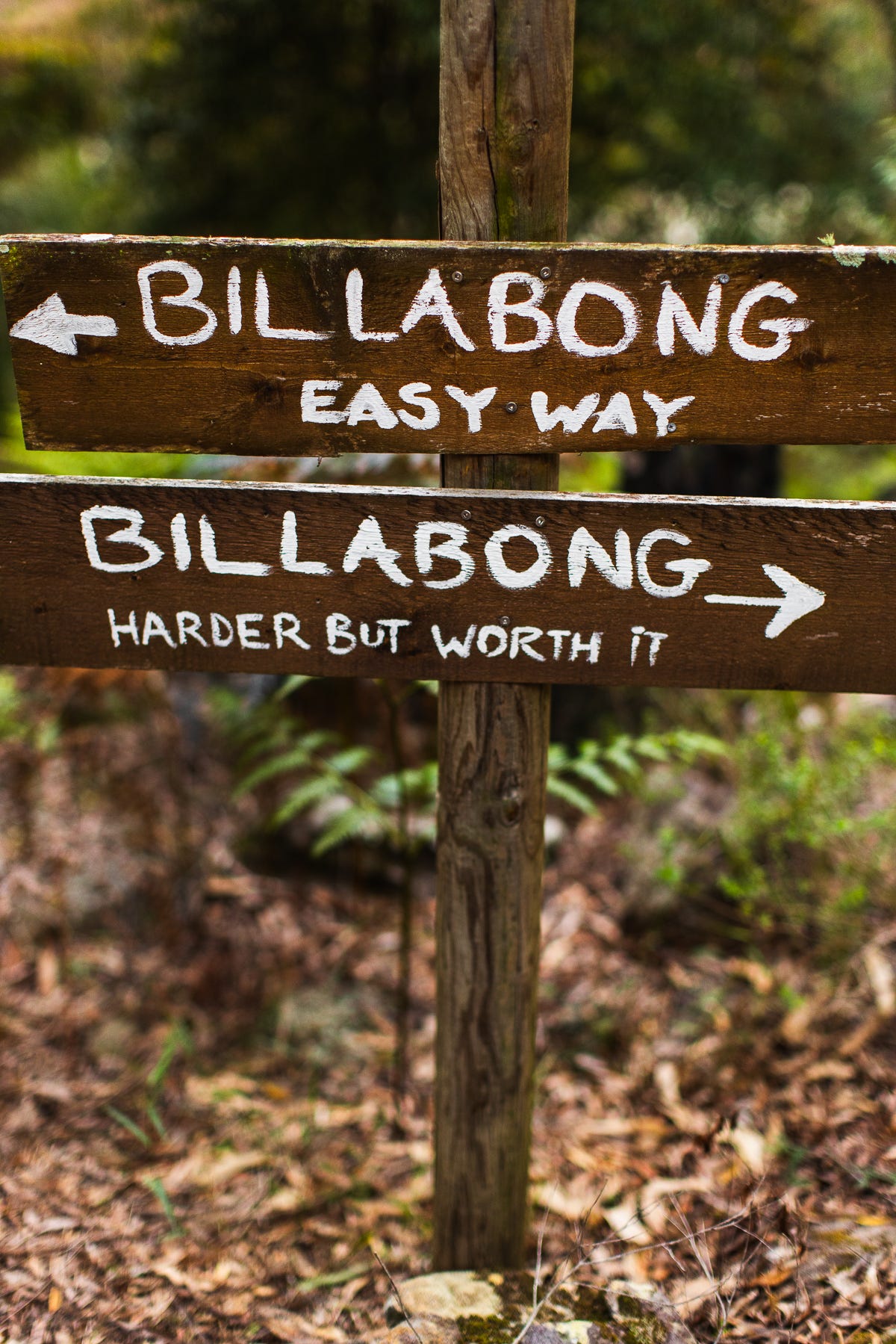
Every morning, after a yoga session in the big hall, I would go for a walk down to the billabong, and I would be met with the sign above. The first morning, I rambled along on the easy path. I was already in a lot of spiritual pain, and I wasn’t about to put myself through physical pain on top of that. After a lovely lunch of a gorgeous vegetable and tofu curry, the chef’s special pickled chilli, a fresh cucumber salad and brown rice, I retired on the balcony of my cabin with my copy of Codependent No More by Melody Beattie. I read for a solid four hours, to say I was hungry to understand what I had been through and how I could survive was an understatement.
Exhausted from reading, I dozed off and woke up with some time left for dinner. So I went for another walk. This time, I took the “harder path”. This path was set on a slope, pavers roughly hewn and lodged in the dirt wall, meandering down to the billabong. A path that would definitely be slippery and unstable when it rained. But it was a cool, dry evening at the tail end of Sydney’s summer, so I made my way down the rough trail, gingerly.
I wasn’t prepared for the view. At the height of the path as I came around a clearing between two cabins on stilts, the entire billabong became visible to me. I had already seen the billabong from end to end, but not like this. A bird’s eye view! What made it breathtaking was the vast expanse of the sky being reflected on the billabong’s surface, the cabins being mirrored in the gentle ripples of the water, and the reflection of the trees melting into the dark, murky depths of the water. It was as if the edge of the real world disappeared and fused with another world. A bigger picture with more depth, more awe, more fascination. An expansion of what I could see and take in.
It was poetic, it was symbolic, it was profound, it was liberating. I needed to take a different path, a harder path, a more treacherous path - by myself- to discover more, to live more, to expand my heart and soul. They were right with the signs - “Harder, but worth it!”
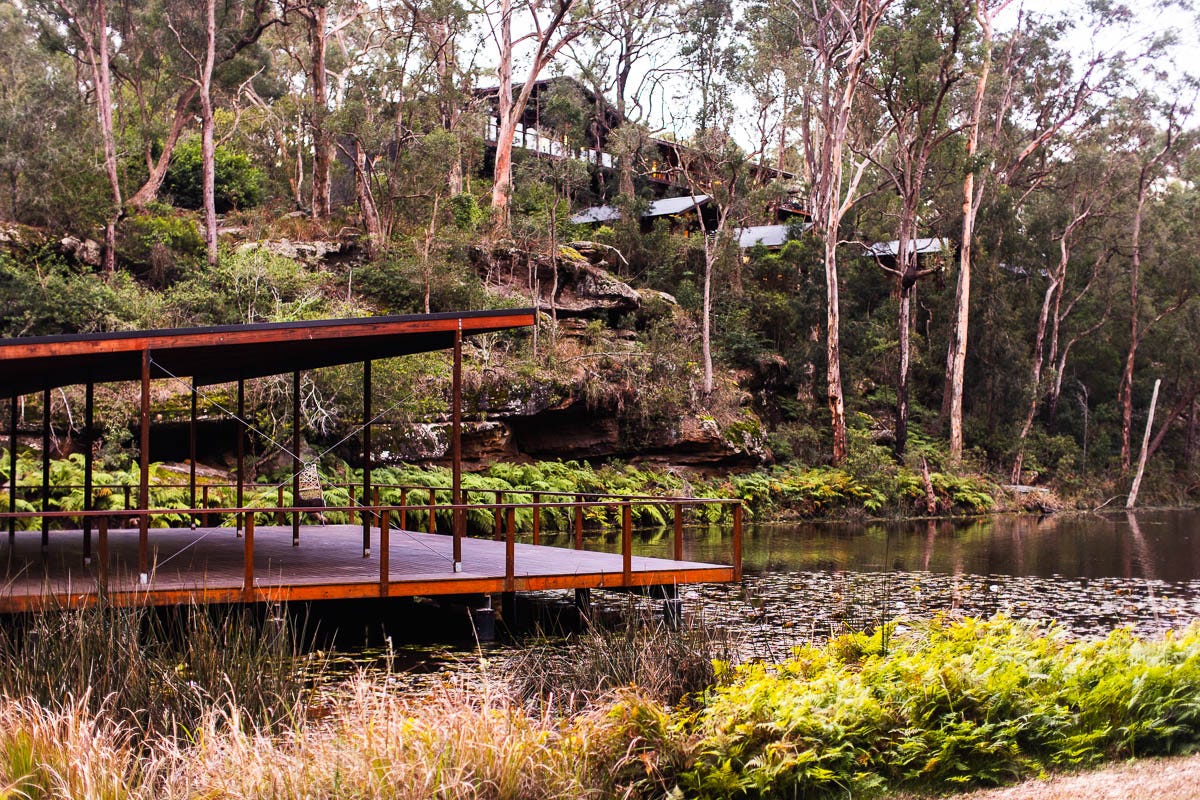
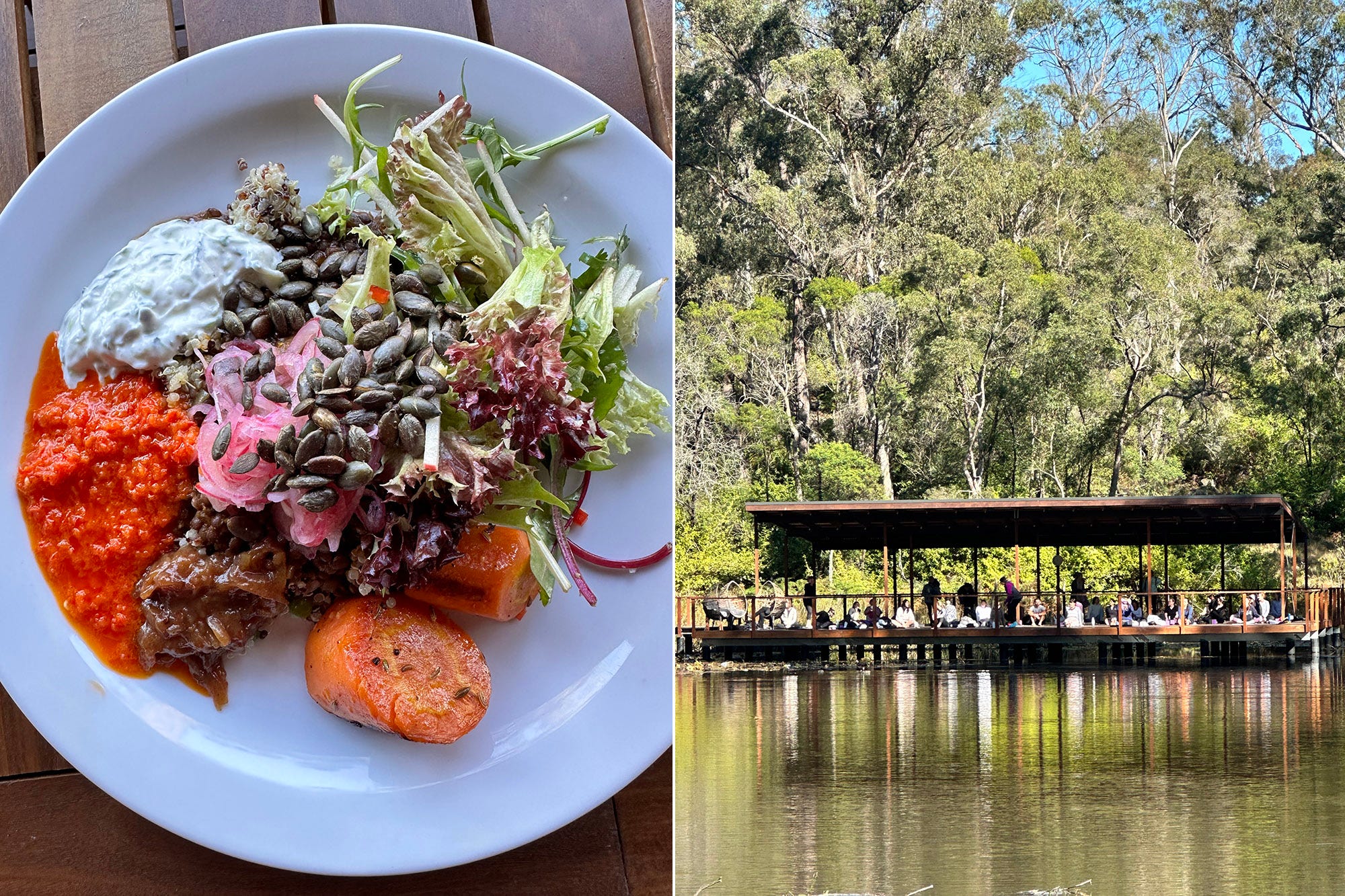
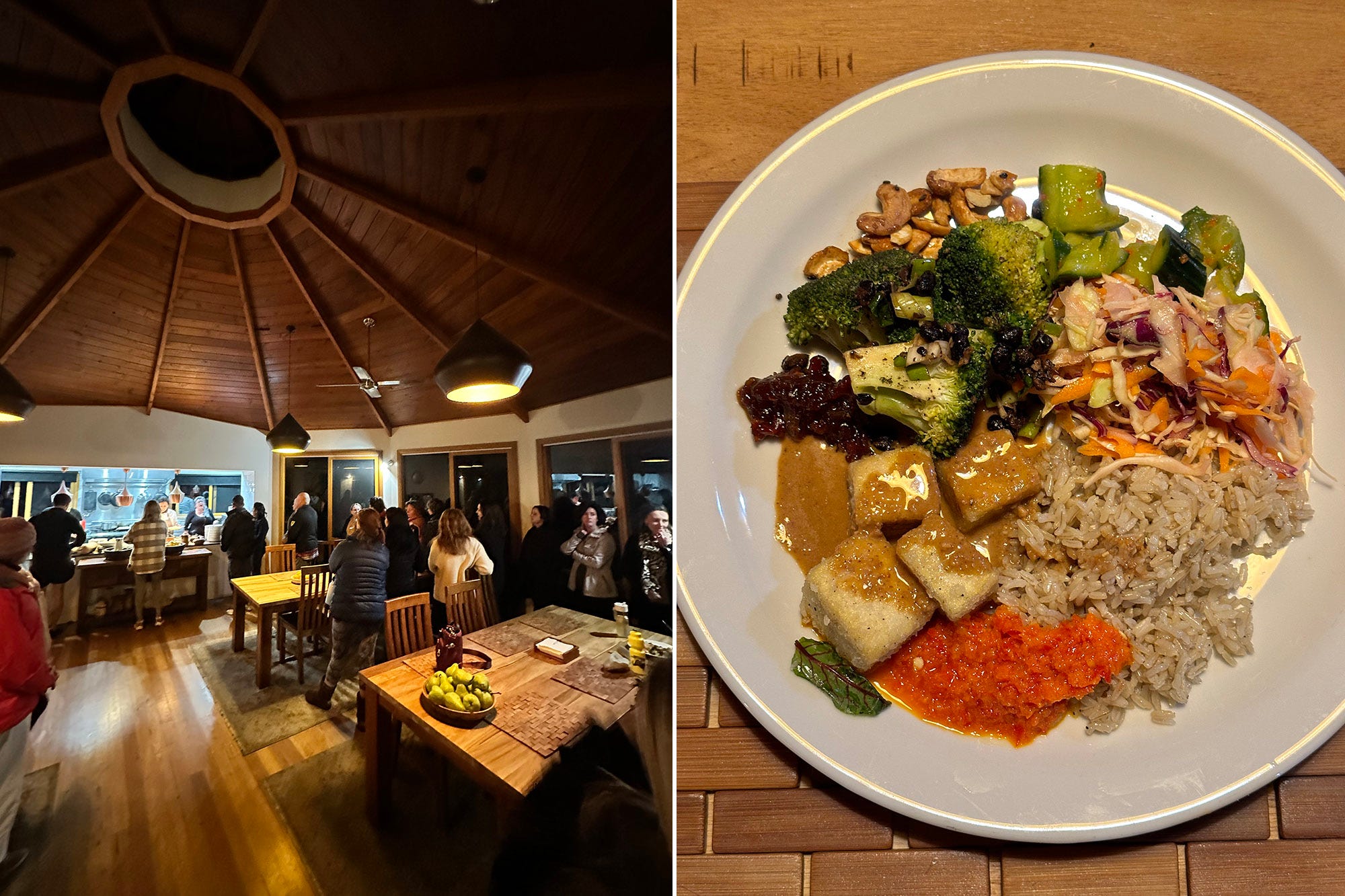
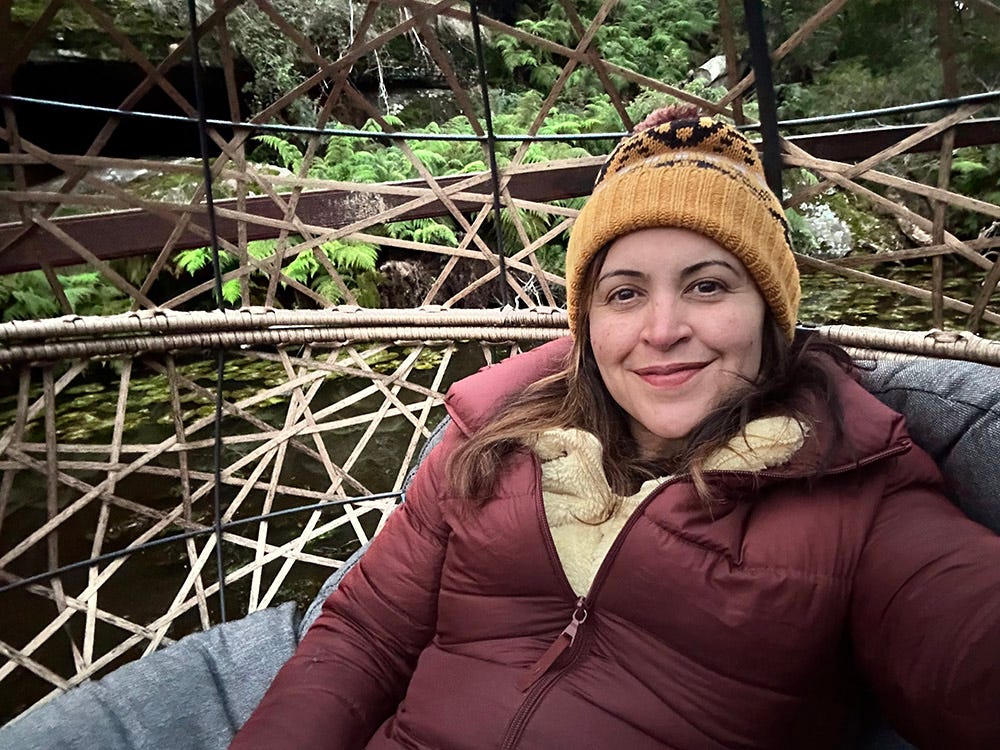
I often sat by myself sipping on herbal teas and delicious bliss balls, watching the fog envelope the long, suspended verandah, chatted to strangers at meal times and got to know them, shelled almonds with one of the chefs in the afternoon for an almond ricotta they were serving that night, exchanging stories and hearing about her horses on a farm nearby.
For the next two days, I never took the easy path to the billabong. And by the end of my stay, the harder path had softened for me and felt easier. The book was read, the silence was no longer deafening, and I felt calmer and stronger and confident that no matter how hard the path I took was, it would soften and become easier.
And of course, I came away with my head, heart and belly full of delicious meals made with love and care and vegetables and spices, slowly simmered and coaxed into glorious flavourful dishes (the last time I was there, I recreated their beautiful Caramel Bliss Balls that I still make every week, they are a great thing to pop in your mouth after a walk or workout!). Today’s Vegetable Korma is something I could see worthy of being served at Billabong retreat. Clever cooking, layering different techniques and building flavours through homemade pastes and slow-simmered sauces.
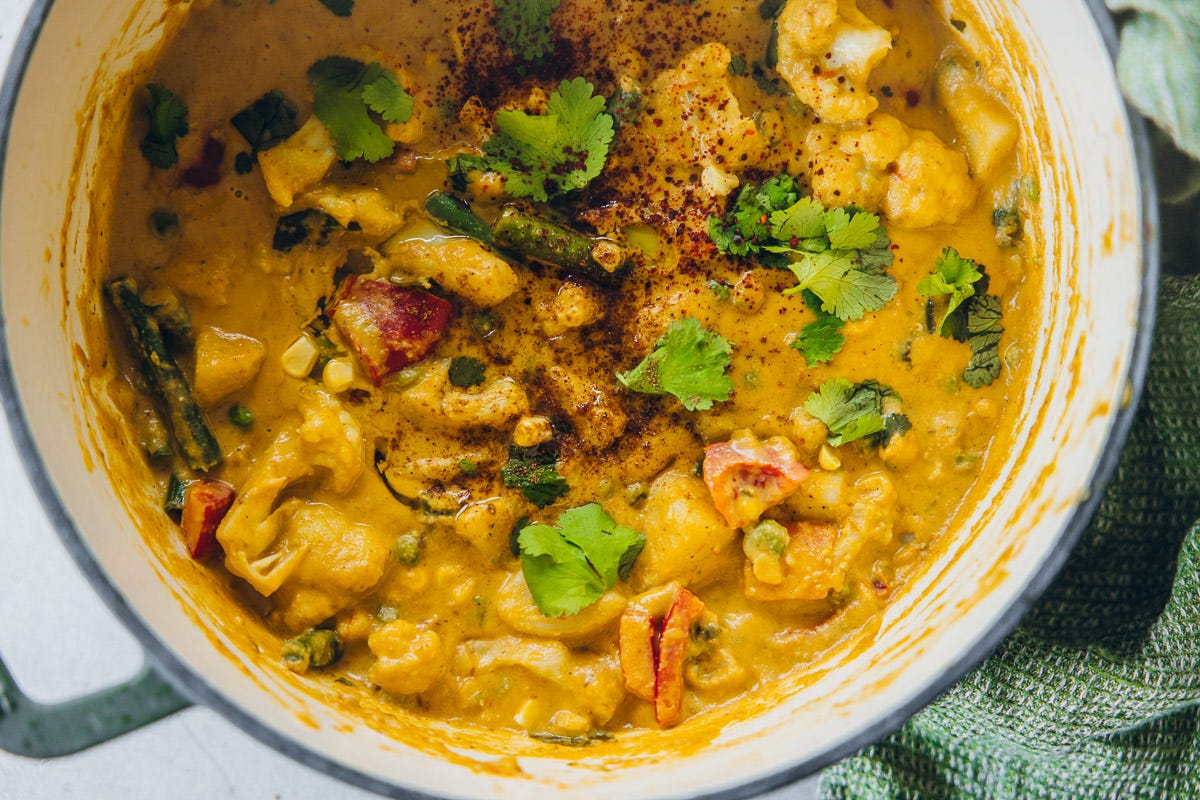
Korma, derived from the Persian word “qormah” or the Turkish word “kavurma” is the peak of Mughlai cuisine and means to braise, stew or fry. Mughlai cuisine originated in the kitchens of the Mughal emperors, during the great Mughal era in India from the 1500s to 1800s.
The Mughal empire was founded by Babur, a descendant of Genghis Khan. The Mughals brought their Persian and Turkic culinary traditions to the Indian subcontinent. Known for many historical, cultural and geographical milestones and landmarks, including the famous Taj Mahal, the Mughal empire’s most notable contribution was their culinary gift to India’s rich history. Their rule ended in the late 1800s and was followed by the colonisation of India by the British Empire. Iconic Mughlai dishes like biryani, korma, and kebabs included slow-cooked meats, rich gravies, and the use of nuts, saffron, and dried fruits
Korma itself involves braising meat or vegetables slowly in a sauce that is traditionally rich with yogurt or cream, ground nuts (like almonds or cashews), and aromatic spices. Over time, korma has developed regional variations. For example, southern states may use cashews and coconut, while northern states often use almonds and dry fruits.
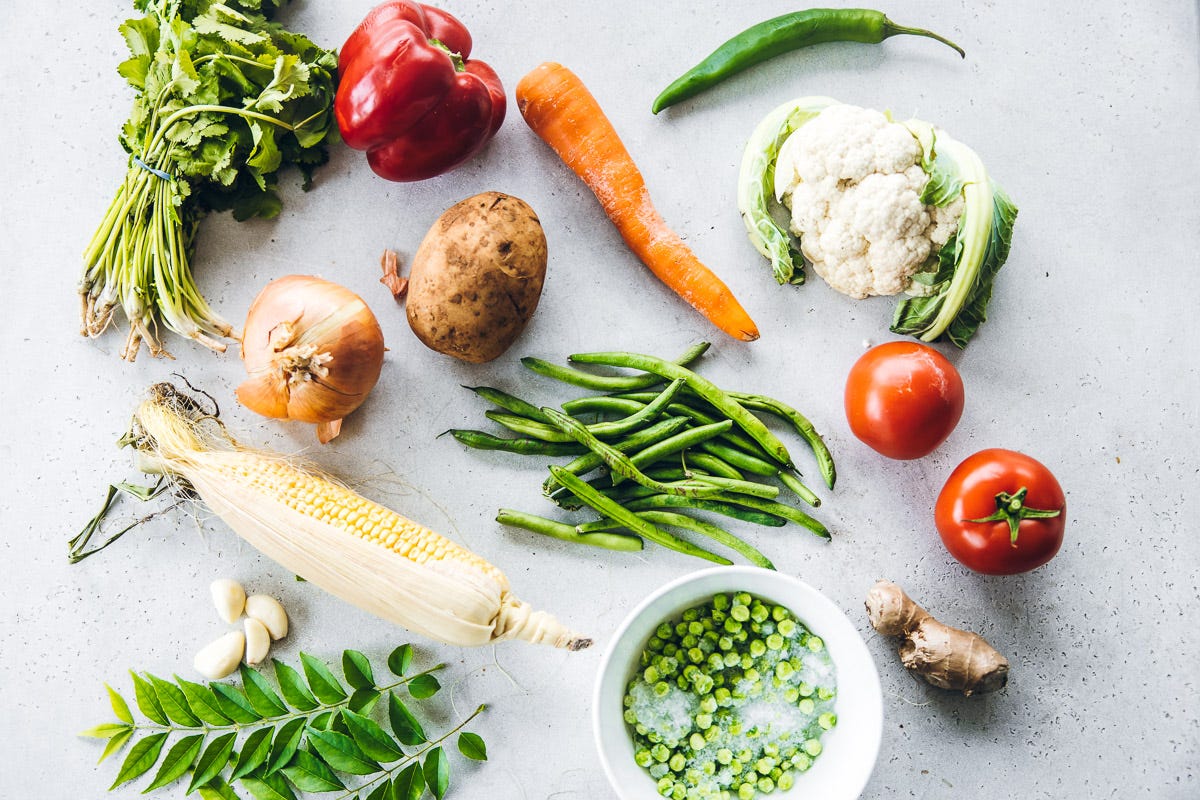
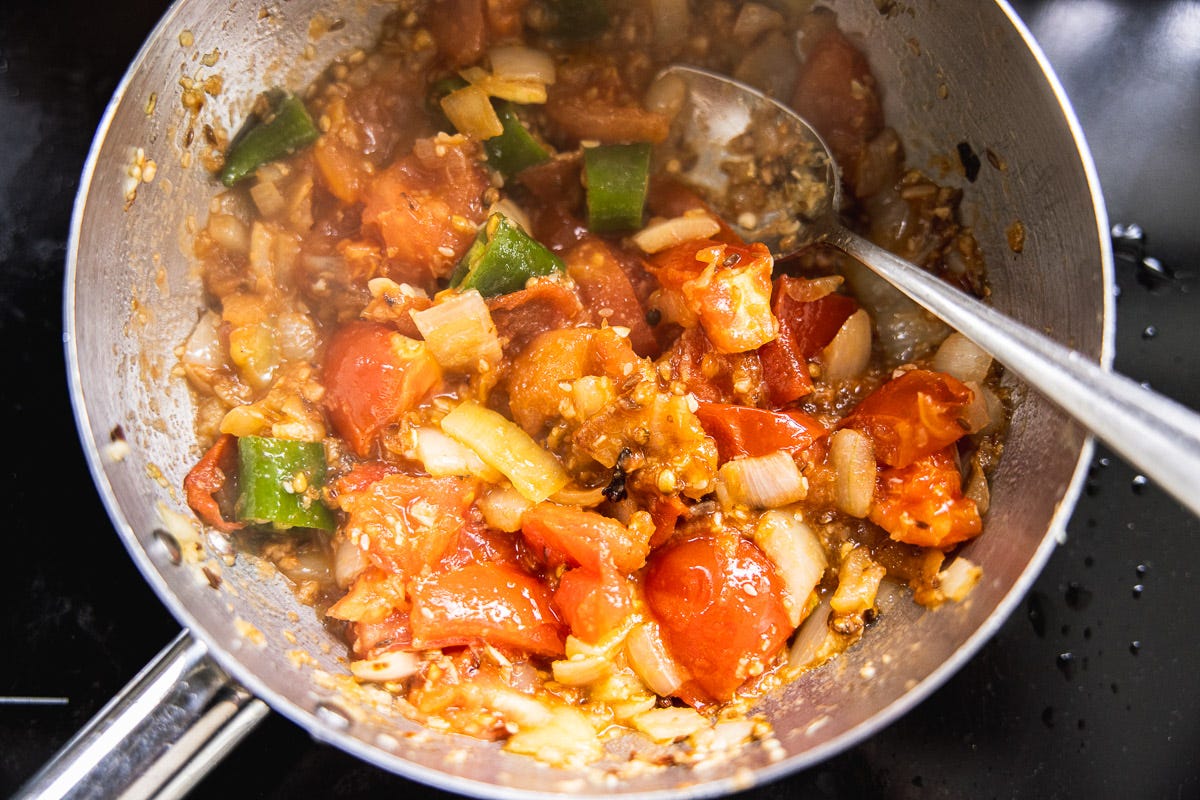
I make Northern and Southern versions of Vegetable Korma, and I honestly can’t decide which one is my favourite. They are both incredibly flavourful, the flavour is built on layers and precise cooking techniques. Today, I am sharing a North Indian Korma with a twist. Instead of cream or yoghurt, I am using cashew nuts and coconut milk to create that luscious base, but the rest of the ingredients and spices are an ode to the north with hints of present-day Punjabi cuisine and Mughlai cuisine of yore.
A Vegetable Korma is perfect for cleaning out the stray veggies in your fridge and is built on a base of an Indian Sofrito, if you will. Sauté and sweat the aromatics until they are translucent, fragrant and glistening. Keep coaxing the tomatoes and spices into unlocking all their flavour, and then blend them up with nuts for a rich, smooth, curry base that will happily sit in your fridge for a few days (or longer in the freezer) to whip up all kinds of delicious curries.
Recipe »
Creamy Vegetable Korma
Serves 6 / vegetarian, gluten free
Just with Chinese wok cooking, the order in which the the vegetables are cooked is important. Curries and sauces are best cooked by feel. You know it’s time for the next step when the onion is golden and soft enough to be mushed between your fingers or when the sauce turns three shades darker and pools fat around the edges. I often cook curries by feel; the time I include in my recipes is merely informative when you don’t feel like cooking with intuition. This is a meal perfect for slow Sunday cooking and quite possibly the most fragrant and flavoursome curry I have tasted in recent times.
Ingredients
